You’re in a group chat when someone writes, “ATP, I’m just staying home.” Your brain stalls. Is that a typo? A code? Everyone else replies like it’s obvious, and you’re stuck wondering what you missed. We’ve all been there, and it feels silly. Slang moves fast, and nobody hands out a manual.
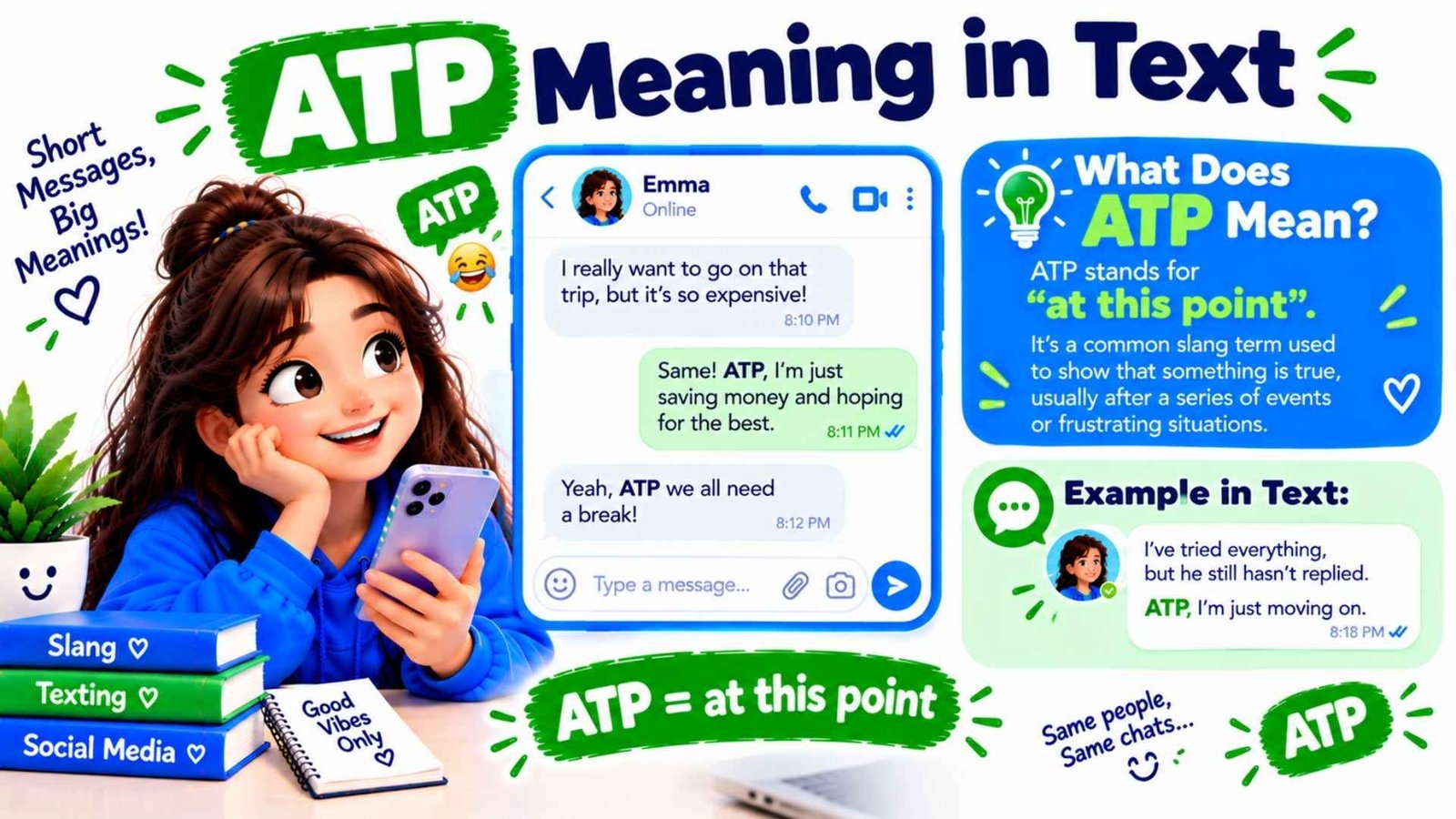
Here’s the short version. The ATP mean in text is “at this point,” and the tone depends on the moment. If you’ve ever searched what does ATP mean texting, this guide gives you clear examples, safe replies, and the ATP mean in text explained without jargon. Stick around, it’s easy.
Quick Answer Box
The ATP mean in text is “at this point.” People use it to share a conclusion about a situation, often with a hint of frustration, acceptance, or humor. For example, “ATP, let’s just order pizza” means “we’ve waited long enough, so pizza it is.” It’s casual, safe for kids, and best skipped in formal writing.
Meaning Summary Box
- Meaning: “at this point”
- Tone: Casual, reflective, sometimes tired or funny
- Where it’s used: Texts, DMs, group chats, comments, captions
- Positive or negative: Neutral, since the mood comes from the words around it
What Does ATP Mean in Text? – Quick Meaning
Short on time and staring at a confusing message? Take a breath. The ATP mean in text takes about five seconds to understand, and you’ll never wonder about it again.
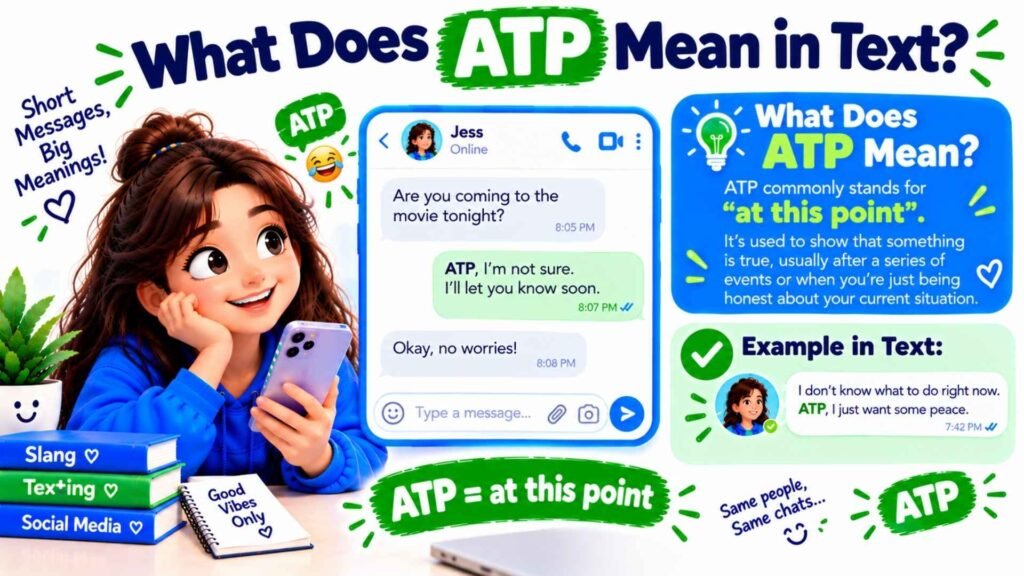
ATP means “at this point” in texting. Someone writes it after reaching a conclusion about a situation. “ATP, I’m going to bed” means “given everything so far, I’m done for the night.” The phrase often carries a little frustration, relief, or humor. It’s short, casual, and easy to use in friend chats and captions.
Key Takeaway: The ATP mean in text is “at this point,” a mini conclusion. Read the words after it to catch the mood.
What Does ATP Mean Texting
Typed a search like what does ATP mean texting after spotting it in a message? You’re not alone, because plenty of people look up slang in the exact same way.
Here’s the answer in one line: what does ATP mean texting? It means “at this point,” used to wrap up a thought. Think of it as a tiny verdict. The summary below gives you the key facts, and the sections after it add examples.
Meaning Summary Box
- Meaning: “at this point”
- Tone: Reflective, tired, funny, or accepting
- Used in: Texts, DMs, comments, captions
- Positive or negative: Either, depending on context
Primary Meaning of ATP in Texting
In texting, the primary meaning is “at this point.” It points to where a situation stands right now. Example: “ATP, nobody’s replying, so I’m done waiting.” The sender looked at the facts and made a call. That’s the whole idea, and it fits almost any situation.
Quick Definition
The ATP mean in text is slang for “at this point.” People use it to state an opinion, sum up a situation, or show they’ve accepted something. Example: “ATP, let’s call it a night.” Swap in “by now” or “given all this” and the meaning stays the same, just less casual.
Example Quotes
Real quotes show the vibe best. “ATP, I’m too tired to argue” sounds worn out. “ATP, let’s grab tacos” sounds practical. “ATP, he’s definitely not coming” sounds like a guess. Same three letters, three feelings. The words after ATP carry the mood.
Key Takeaway: Whenever you wonder what does ATP mean texting, remember it’s a verdict in three letters, and the tone comes from the sentence around it.
Origin & Background
Every slang term has a past. ATP’s story is a quiet, simple one, and honestly that makes it more interesting. Let’s trace where this little phrase most likely came from.
No one can point to the first person who typed ATP, and there’s no solid record, so we won’t invent a date. What we can explain is how the ATP mean in text took shape, how phones helped, and where it spread.
Where ATP Came From
ATP is most likely a texting shortcut for “at this point,” like TBH or IMO. People already said “at this point” out loud all the time, so shortening it was natural. Typing on small phone keyboards likely helped short forms catch on. Example: “ATP, just call me.” Simple and quick.
Social Media Influence
Short-form apps gave ATP a bigger stage. TikTok, Instagram, Snapchat, and X reward quick, punchy text, so captions and comments were a perfect fit. Example: a comment like “ATP, this story needs a part two.” The phrase likely spread as people copied what they saw.
How the Meaning Evolved
The core meaning hasn’t changed: “at this point.” What shifted is the feeling attached to it. Many people now use ATP with a sigh, a joke, or a shrug. Example: “ATP, nothing shocks me.” The words stay simple while the mood does the heavy lifting.
Key Takeaway: The exact first use of ATP is unknown, but the ATP mean in text has stayed steady while the mood around it grew richer.
Real-Life Conversations
Definitions help, but real chats teach faster. Picture the messages you actually send on a normal day, then add ATP. Here are four everyday settings where ATP often shows up.
Each scenario below shows the ATP mean in text in a different app. The meaning stays “at this point,” while the tone shifts with the platform and the people. Notice how the words around ATP tell you whether it’s annoyed, funny, or calm.
WhatsApp Conversation
WhatsApp chats are often with family and close friends, so ATP sounds relaxed and practical. It usually wraps up a plan. In the example below, one person decides the group has waited long enough. Notice there’s no anger, just a calm decision.
Example in chat:
Friend 1: “Did anyone hear back about dinner?”
Friend 2: “ATP, let’s just book the table.”
Instagram DM Conversation
Instagram DMs feel casual and a bit playful, so ATP often shows up with humor or mild stress. People use it to joke about shared problems. Here, two friends deal with a late-night deadline. The slang makes the stress feel lighter.
Example in chat:
Friend 1: “Did you start the project?”
Friend 2: “ATP, I’ll just pull an all-nighter.”
TikTok Comment Section
TikTok comments move fast, and ATP fits the jokey, dramatic tone. Viewers use it to react to a creator’s story or a never-ending series. Example below shows a fan teasing a creator. It’s quick, funny, and says a lot in few words.
Example in chat:
Comment: “Part 9 already?”
Reply: “ATP, we’re basically watching a TV show.”
Text Message Conversation
One-on-one texts are where ATP gets personal. It can signal a firm decision or a tired shrug. Pay attention to the person’s mood. Here, a friend gives up on a late bus and picks a backup plan, which is classic ATP energy.
Example in chat:
Friend 1: “The bus is 30 minutes late.”
Friend 2: “ATP, I’m calling a ride.”
Key Takeaway: In every app, the ATP mean in text stays the same. Only the mood and the audience change.
Emotional & Psychological Meaning
Three letters can hold a whole mood. When someone texts ATP, they’re often saying more than the words show. Let’s look at the feelings tucked inside this tiny little phrase.
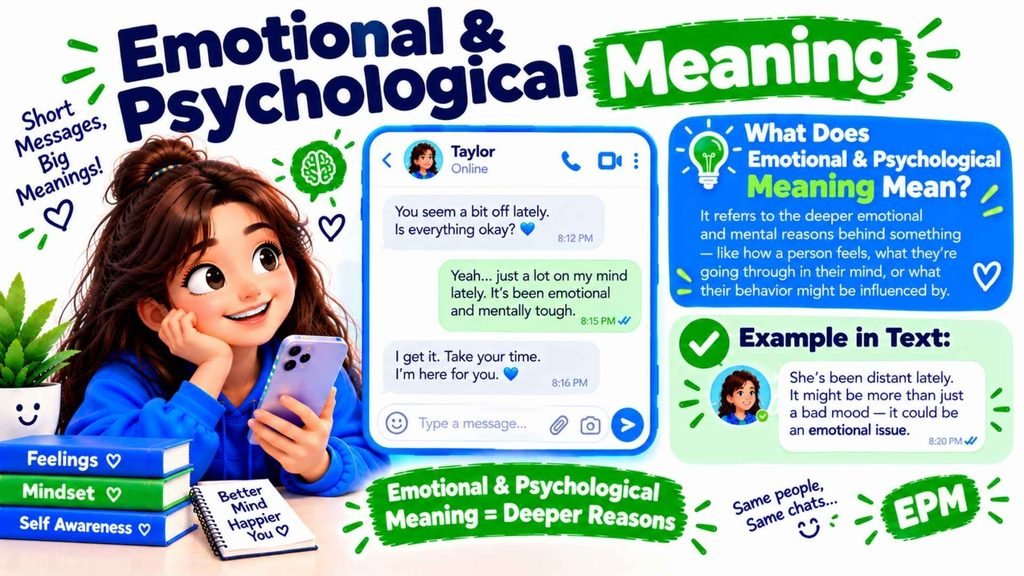
The ATP mean in text works like a mood marker. The phrase says “at this point,” but the feeling comes from context, punctuation, and who’s talking. This section covers the emotions, the reasons people reach for it, and what it says about how we text today.
What Emotion Does ATP Express?
ATP can show frustration, tiredness, relief, humor, or calm acceptance. Which one you get depends on the sentence. “ATP, I give up” sounds worn out, while “ATP, we deserve a treat” sounds happy. Read the surrounding words first, and the emotion usually becomes clear.
Why People Use It
People use ATP because it’s fast and carries feeling. Typing a full sentence about how you reached a conclusion takes effort, while ATP does the job in three letters. It also feels less heavy than a long complaint. Example: “ATP, I’m over it.”
What It Reveals About Modern Communication
ATP shows how much we value speed in digital chats. People want messages that are short, clear, and relatable. That doesn’t mean we care less. It means we’ve learned to pack tone into tiny words, then trust friends to read between the lines. Example: “ATP, same energy.”
Personal-Style Scenario
Say your roommate has promised to fix the Wi-Fi for a week. Finally you text, “ATP, I’m calling the company myself.” You’re not furious. You’re just done waiting, and you’re saying so without drama. One small message settles the issue.
Key Takeaway: The ATP mean in text is “at this point,” but feelings do the real talking. Check the context before you decide how it sounds.
Usage in Different Contexts
Slang is like clothing: the right choice depends on where you’re going. ATP looks great in some places and awkward in others. Let’s check each setting together, one by one.
The ATP mean in text stays the same everywhere, but the best way to use it changes. Public posts, friend chats, and workplace messages each have their own rules. Use the quick guide below to pick the right tone before you hit send.
| Setting | Use ATP? | Why |
|---|---|---|
| Group chat with friends | Yes | Relaxed and expected |
| Social media caption | Yes | Short and relatable |
| Message to a partner | Usually | Keep the tone kind |
| Work email | No | Too informal |
| School essay | No | Needs full words |
| Message to a grandparent | Better to skip | They may not know it |
Social Media
On social media, ATP appears in captions, comments, and memes. It works best as a quick reaction. Example: “ATP, my camera roll is just food pics” under a photo dump. It’s playful, public, and easy for followers to relate to.
Friends and Relationships
Among friends, ATP signals honesty without heavy drama. With a partner, it can soften a hard truth, but tone matters more. Example: “ATP, I’d rather just see you.” Warm, short, and real. If the topic is serious, follow up with a full sentence.
Work and Professional Settings
ATP is too casual for most work messages. Clients, managers, and teachers may not know it. Write “at this point” in full instead. Example: “At this point, we should confirm the deadline.” Some relaxed teams use slang in chat, so match what your coworkers do.
Casual vs Serious Tone
The same three letters can sound light or heavy. “ATP, let’s get ice cream” is casual. “ATP, we need to talk about this” is serious. Use ATP for light moments, and switch to full sentences when feelings or stakes run high. People will notice the care.
Key Takeaway: The ATP mean in text fits friends and online spaces best. Switch to “at this point” for work, school, and sensitive talks.
ATP Meaning on TikTok, Snapchat, and Instagram
Does ATP mean something different on each app? Not really, but honestly the mood shifts. Think of every platform as a different room with its own unwritten rules for talking.
The ATP mean in text is the same on every app: “at this point.” On TikTok, it shows up in captions and comments, often with a joke. On Snapchat, it appears in quick, private messages. On Instagram, you’ll see it in comments, DMs, and Stories. The tone changes with the audience, but the meaning never does.
| Platform | Typical Tone | Typical Use |
|---|---|---|
| TikTok | Funny, dramatic | Captions and comments |
| Snapchat | Quick, private | Snap captions and chats |
| Casual, expressive | DMs, comments, Stories | |
| Relaxed, practical | Family and friend chats | |
| X (Twitter) | Short, punchy | Replies and posts |
How to Use ATP Correctly in a Sentence
Want to use ATP without sounding like you’re trying too hard? Good news: it’s honestly very easy. A few simple habits make it sound natural in your own everyday messages.
Put ATP at the start of a sentence, followed by a comma and your conclusion. Say “ATP, let’s reschedule,” not “Let’s reschedule ATP.” Keep the rest of the sentence short and clear. Use it once per message, and only when you’ve truly reached a conclusion. Here’s a quick checklist you can follow today.
- Start the sentence with ATP, then add a comma.
- Follow it with a clear conclusion or decision.
- Use it once per message so it keeps its punch.
- Match the tone of the chat, funny or calm.
- Skip it with bosses, teachers, and strangers.
- Switch to a full sentence when the topic is serious.
Example in texting:
Friend 1: “Are we still waiting for Jake?”
Friend 2: “ATP, let’s just start without him.”
When NOT to Use It
Even harmless slang can land badly in the wrong room. Nobody wants to send the wrong vibe by accident. Here are the exact moments when you should simply skip ATP.
Even though the ATP mean in text is harmless, the phrase is informal and sometimes unclear. Skip it when the reader might not know it, when the topic is weighty, or when you want to sound polished. A full “at this point” always works and never confuses anyone.
Professional Communication
Business emails, reports, and client messages call for clear, formal wording. Many readers won’t recognize ATP, and slang can seem careless. Example: instead of “ATP, we should reschedule,” write “At this point, rescheduling makes sense.” The message stays friendly and professional.
Academic Writing
Essays, lab reports, and research papers need full words. Abbreviations like ATP look out of place in formal writing, and in science papers they could be confused with the molecule. Write “at this point” every time. Example: “At this point, the results are unclear.”
Conversations with Older Audiences
Not everyone follows internet slang, and that’s fine. A grandparent or older relative may read ATP as a typo. Use a full sentence instead. Example: “At this point, let’s start dinner.” It’s clear, kind, and saves you from a confused phone call.
Sensitive Situations
When someone is grieving, upset, or facing a big decision, a slang abbreviation can feel cold. Full sentences show care. Example: instead of “ATP, whatever you decide,” try “Whatever you decide, I’m with you.” Kind words beat short ones every time.
Key Takeaway: The ATP mean in text is safe, but timing matters. When in doubt, write the full phrase.
Common Misunderstandings
Slang breeds myths very quickly. You might have heard ATP is always angry, always rude, or always about biology. Let’s sort the facts from the guesses right here, right now.
Most mix-ups about the ATP mean in text come from simply missing context. One person reads anger where there’s humor, or science where there’s slang. These four misunderstandings come up most often, and each one has a simple fix.
Confusing It with Scientific ATP
In biology, ATP means adenosine triphosphate, a molecule cells use to store and move energy. In texting, it means “at this point.” The surrounding words tell you which one applies. Example: “ATP powers the cell” is science, while “ATP, I’m napping” is slang.
Assuming It Always Means Frustration
Frustration is common, but it’s not the only mood. ATP can sound funny, calm, confident, or sarcastic. “ATP, I’m basically a chef” is pure humor. Treat the feeling as a clue, not a rule, and check the words around it.
Misreading the Tone
Text has no voice, so tone is easy to miss. “ATP, I’m proud of you” feels warm, while “ATP, nothing ever works out” can feel bitter. If the tone is unclear, ask a quick question. A simple “You okay?” clears up most confusion.
Taking It Literally
ATP rarely means just “at this point” on the surface. It often carries a decision or a feeling too. “ATP, I’m done” usually isn’t about a time at all. It’s about patience. Read the intent, and you’ll understand the message much better.
Key Takeaway: Context solves nearly every ATP mix-up, whether it’s science, tone, or literal meaning. The ATP mean in text is easy once you check it.
Other Meanings of ATP Outside Texting
Searched ATP and landed on tennis or biology in your results? That’s perfectly normal. The same three letters work in several fields, and context decides exactly which meaning you need.
Outside chats, ATP can mean adenosine triphosphate, the energy molecule in cells, or the Association of Tennis Professionals, which runs the ATP Tour. In aviation, an ATP certificate refers to an airline transport pilot license. In a message from a friend, though, the ATP mean in text is almost always “at this point.” The surrounding words give it away.
| Meaning | Field | Where You’ll See It |
|---|---|---|
| At this point | Texting and social media | Chats, comments, captions |
| Adenosine triphosphate | Biology | Science class, textbooks |
| Association of Tennis Professionals | Sports | ATP Tour news |
| Airline Transport Pilot | Aviation | Pilot licensing |
Is ATP Positive or Negative?
Is it a happy phrase or a grumpy one? Fair question, since people use ATP in both moods. Here’s a clear and simple way to tell which one you’re reading.
The ATP mean in text is neutral, so it can be positive or negative. The phrase only marks a conclusion, and the feeling comes from the words after it. “ATP, we deserve a vacation” is cheerful. “ATP, nothing went right today” is gloomy. Check the second half of the sentence, and the mood becomes obvious.
Comparison Table
Slang abbreviations can start to blur together. TBH, IMO, IDC, and ATP all show up in chats. This chart shows how they differ so you can pick the right one.
People often mix up the ATP mean in text with other short opinion phrases. Each one adds a different flavor. ATP wraps up a situation, TBH adds honesty, and IMO shares a view. The table below gives each term’s meaning, tone, and an example.
| Term | Stands For | Tone | Example |
|---|---|---|---|
| ATP | At this point | Reflective, sometimes tired | “ATP, let’s order in” |
| TBH | To be honest | Direct, open | “TBH, I loved it” |
| IMO | In my opinion | Neutral | “IMO, it’s too long” |
| IDC | I don’t care | Dismissive | “IDC, pick anything” |
| FR | For real | Agreeing, serious | “FR, that’s true” |
| NVM | Never mind | Casual, brushing off | “NVM, I found it” |
Key Insight
ATP stands out because it bundles a conclusion with a mood. TBH shares honesty, and IMO shares a view, but ATP says, “I’ve seen enough, and here’s my verdict.” Example: “ATP, I’m taking the earlier train.” That mix of decision and feeling likely explains its popularity.
Variations / Types
ATP rarely travels alone. Most of the time it opens a short phrase that shows exactly how the sender really feels. Here are ten combinations you’ll see most often online.
These ten phrases are patterns, not official terms, so you won’t find a rulebook. They’re common ways people finish the thought after ATP, and each one shades the ATP mean in text. Each has a feeling, a typical moment, and an example.
ATP, I’m Done
This one signals burnout or lost patience. It’s the sound of someone reaching their limit. Use it for small things like a long queue, not big life choices. Example: “ATP, I’m done with this group project.” It’s dramatic in a relatable way.
ATP, Whatever
Here the sender accepts something without enthusiasm. It can sound relaxed or a little sulky, depending on punctuation. A period at the end often feels colder. Example: “ATP, whatever works for you.” If you’re not sure about the mood, ask.
ATP, Just Go
This phrase pushes toward action. It says the debate is over, so move. It can sound bossy, so use a friendly tone. Example: “ATP, just go and ask them.” Friends often say it to encourage someone who keeps overthinking things.
ATP, It Doesn’t Matter
Here the speaker shows they’re past caring, or they want to calm things down. It can be gentle or dismissive. Example: “ATP, it doesn’t matter who started it.” Be careful, since the other person might hear it as you shutting them out.
ATP, We Know
This one says something has become obvious. It’s often playful, like teasing a friend about a habit. Example: “ATP, we know you’re running late.” Used kindly, it’s a joke. Used sharply, it can sound like an eye roll, so watch your tone.
ATP, Everyone Knows
Similar to the last one, but wider. It suggests a fact is common knowledge. Example: “ATP, everyone knows pineapple pizza starts arguments.” It’s a fun way to make a light claim feel like a shared truth. Skip it for serious claims, because it can sound sure without proof.
ATP, Let’s Move On
A gentle way to close a topic. It can calm an argument or end a pointless debate. Example: “ATP, let’s move on and pick a movie.” It works best when both sides want to stop, and less well if one person still feels unheard.
ATP, Why Bother
This phrase sounds discouraged. The speaker feels the effort won’t pay off. Example: “ATP, why bother cleaning before the party?” It’s often a mild joke, but if a friend says it about something big, check in with them kindly right away.
ATP, It’s Fine
Watch this one closely. It can mean real acceptance or hidden annoyance. Example: “ATP, it’s fine, enjoy your trip.” The tone around it usually tells you which. If the message feels off, a quick “Are you sure?” shows you care.
ATP, Might As Well
This is the practical one. It says the best option is the easy one nearby. Example: “ATP, might as well order dessert.” It’s light, a bit playful, and common when plans change and someone suggests a simple backup. Most people just agree.
Key Takeaway: The words after ATP shade the ATP mean in text from playful to tired, so read them closely.
Why Do People Say ATP Online?
Why three letters instead of just three words? It sounds tiny, but there’s real logic behind it. People have really good reasons for choosing this handy shortcut every single day.
People say ATP online because it’s quick, expressive, and easy to type on a phone. It lets them share a conclusion and a mood together at once. It also sounds friendlier than a long speech. Friends copy each other’s phrases too, so ATP spreads naturally through chats, comments, and captions.
How to Respond When Someone Uses It
Someone sends ATP and now it’s your turn. What do you say back? Relax a little. You’re not replying to the slang, you’re replying to the feeling underneath it all.
The best reply matches the mood and the relationship. A friend venting about a long day needs warmth, while a friend joking around wants a joke back. Pick the style that fits, and keep it short. Once you know the ATP mean in text, four styles cover most chats.
Casual Replies
Casual replies keep things easy. Try “Yeah, fair,” “Honestly, same,” or “That tracks.” They show you heard the message without turning it into a big talk. Example: Friend 1 says, “ATP, I’m skipping the gym.” You reply, “Honestly, same.” Done.
Funny Replies
Humor works when the mood is light. You can mirror the slang or tease gently. Try “ATP, the printer wins again” or “ATP, snacks fix everything.” Skip jokes if the person sounds truly upset, because timing matters more than the punchline.
Mature Replies
Mature replies are calm and helpful. They work when the topic matters. Try “That makes sense,” “I get why you’re tired,” or “What should we do next?” Example: after “ATP, I can’t keep juggling everything,” reply, “Let’s talk it through tonight.”
Respectful Replies
Respectful replies fit bosses, older relatives, or new acquaintances. Keep the slang out and the tone kind. Try “Thanks for telling me,” “I understand your point,” or “I appreciate the honesty.” Example: “ATP, I’ll skip it.” Reply: “Understood, thanks for letting me know.”
Key Takeaway: Reply to the feeling first and the slang second, and you’ll rarely go wrong.
ATP Alternatives: Other Ways to Say “At This Point”
Sometimes ATP feels too casual, or your reader might not know it. No stress at all. English has plenty of clear swaps that keep your meaning and your friendly tone.
You can replace ATP with “right now,” “by now,” “at this stage,” or “given everything.” Each one keeps the same idea of reaching a conclusion. Pick a casual swap for friends and a formal swap for work or school. The goal is the same either way: a clear message the reader understands.
- By now works in casual chats: “By now, he’s not coming.”
- Right now keeps things simple: “Right now, I just need sleep.”
- At this stage sounds polished: “At this stage, we should confirm.”
- Given everything feels thoughtful: “Given everything, I’d skip it.”
- At this moment suits formal notes: “At this moment, we have no update.”
Regional & Cultural Usage
Slang doesn’t stop at borders, but it does change shape as it travels. Here’s an honest look at how ATP most likely moves around the world and across age groups.
I couldn’t find a solid study tracking ATP by country, so we won’t make up numbers. What we can describe are general patterns in English-language online slang, based on how apps and friend groups share it. Treat the sections below as informed context about the ATP mean in text, not hard data.
Western Culture
In English-speaking countries like the US, UK, and Canada, ATP tends to appear in casual chats and comments, especially among younger people. It sits alongside other short opinion phrases such as TBH. Example: “ATP, just send the meme.” It’s familiar, informal, and easy to follow in friend groups.
Asian Culture
Many people in Asia use English online alongside their own languages. They may know ATP from global apps, while local slang often feels more natural in everyday chats. Example: a bilingual user might write “ATP, let’s order” in an otherwise local-language message. Mixing languages is common.
Middle Eastern Culture
Bilingual and multilingual users across the Middle East often mix English slang into chats on apps like Instagram, Snapchat, and TikTok. ATP can show up there the same way it does elsewhere. Example: “ATP, I’m sleeping.” The meaning stays the same, but tone follows each friend group.
Global Internet Usage
Social media connects people everywhere, so slang crosses borders fast. A phrase like ATP can travel from one comment section to another quickly. Example: a popular video’s comments might show ATP from viewers in many countries. The meaning stays steady, while local flavor changes.
Generational Differences
Gen Z tends to use ATP most, often mixed with other slang. Millennials usually recognize it and use it less. Older adults may not know it at all. That’s a general pattern, not measured data. Example: a teen texts “ATP, same,” while a parent writes the full phrase.
Key Takeaway: ATP spreads wherever English slang travels online, but there’s no hard data on exact regions or ages.
Is ATP a Bad Word?
Nobody wants to send something rude by accident. So let’s settle this question right away, and you can stop worrying before your next message goes out to anyone at all.
No, ATP is not a bad word. It means “at this point” and has no swear words or insults hidden inside. The only catch is style, since it’s informal slang. Use it with friends, skip it in formal writing, and you’re completely fine. A full “at this point” always works too.
Is It Safe for Kids?
Parents often wonder about this, and it’s a smart question. Slang can hide surprises, so checking first is a good habit. Here’s the honest, calm answer for parents right now.
Yes, the ATP mean in text is safe for kids, because it simply means “at this point.” It has no swear words or adult meaning in texting. The real risk isn’t the slang, it’s the conversation around it. Talk with your child about tone, and keep an eye on who they chat with. Example: “ATP, I’m bored” is harmless.
Frequently Asked Questions
What Does ATP Mean Texting?
The ATP mean in text is “at this point.” So when you ask what does ATP mean texting, the answer is a quick conclusion about a situation, often with a hint of frustration, humor, or acceptance. It’s casual and friendly.
What Does ATP Mean on TikTok?
On TikTok, the ATP mean in text stays the same: “at this point.” You’ll see it in captions and comments that react to a story or trend. The tone is usually jokey and dramatic.
Can I Use ATP in Work Emails?
It’s best to skip it. Even though the ATP mean in text is harmless, many coworkers won’t know it, and formal writing needs full words. Write “at this point” instead.
Is ATP Gen Z Slang?
ATP is common with Gen Z, though many Millennials understand it too. The ATP mean in text doesn’t belong to one age group, since anyone who texts can pick it up. Older adults may be less familiar with it.
Does ATP Always Show Frustration?
No, it can sound funny, calm, or confident too. The ATP mean in text is only a conclusion, and the mood comes from the words around it. Check the full sentence before you decide.
How Do I Reply When Someone Texts ATP?
Reply to the feeling, not the slang. A quick “Fair enough” or “Honestly, same” works for most chats. Once you know the ATP mean in text, matching the mood is easy.
Does ATP Have Any Other Meanings?
Yes. Outside chats, ATP can mean adenosine triphosphate, the Association of Tennis Professionals, or an airline transport pilot certificate. The ATP mean in text is “at this point,” and context tells you which one fits.
Summary Box
The ATP mean in text is “at this point.” It’s a casual way to share a conclusion, and the mood comes from the words around it. It can be positive or negative, it’s safe for kids, and it’s best replaced with the full phrase in formal writing. If you searched what does ATP mean texting, read the words after ATP and you’ll catch the feeling.
Conclusion
Now you know the ATP mean in text, and it’s friendlier than it first looks. ATP stands for “at this point,” and people use it to share a conclusion with a little mood attached. It can sound tired, funny, calm, or sarcastic, so the words around it matter most.
If you’ve ever typed what does ATP mean texting into a search bar, you now have a clear answer, plus examples and replies. Remember three habits: read the sentence after ATP, match your audience, and use “at this point” in full when things get formal. Knowing the ATP mean in text also helps you reply with the right energy. Once the ATP mean in text clicks, group chats feel easier to follow. Next time a friend sends ATP, reply to the feeling first, and watch the conversation get a lot smoother.

LearnerGrammar.com helps English learners improve grammar, vocabulary, writing, and communication skills with simple lessons and tips.