When someone sends you LMR on Snapchat, it can leave you wondering what they actually want. Is it a request to like a post, a casual message, or something else? Understanding texting slang can make online conversations much easier.
The LMR Snapchat meaning is usually Like My Recent, a request to engage with someone’s latest social media post. This guide explains LMR meaning on Snapchat, its other possible definitions, real-life texting examples, and how to use it naturally. Let’s look at what it means and how it fits into everyday conversations.
What Does LMR Mean in Text?
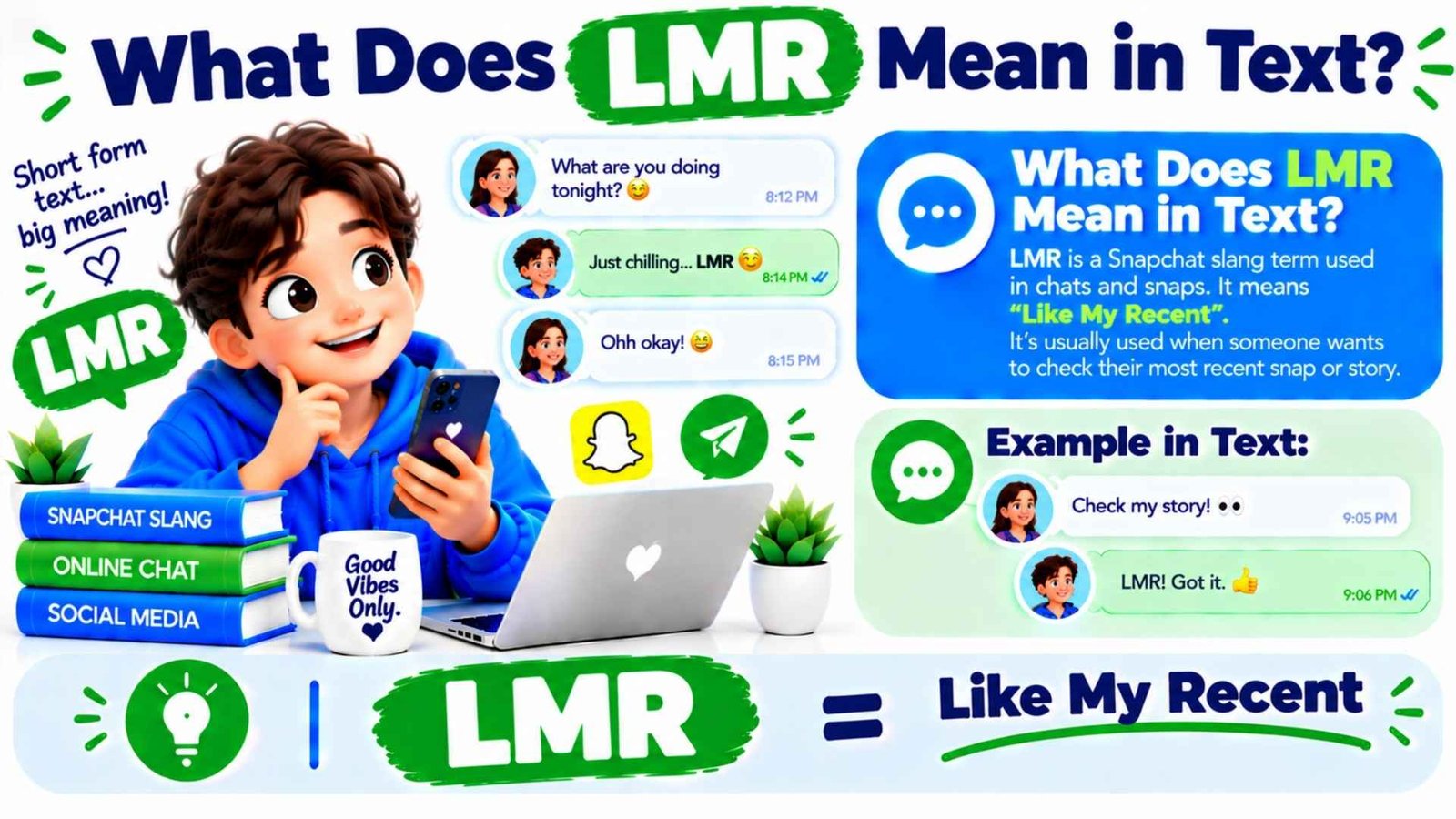
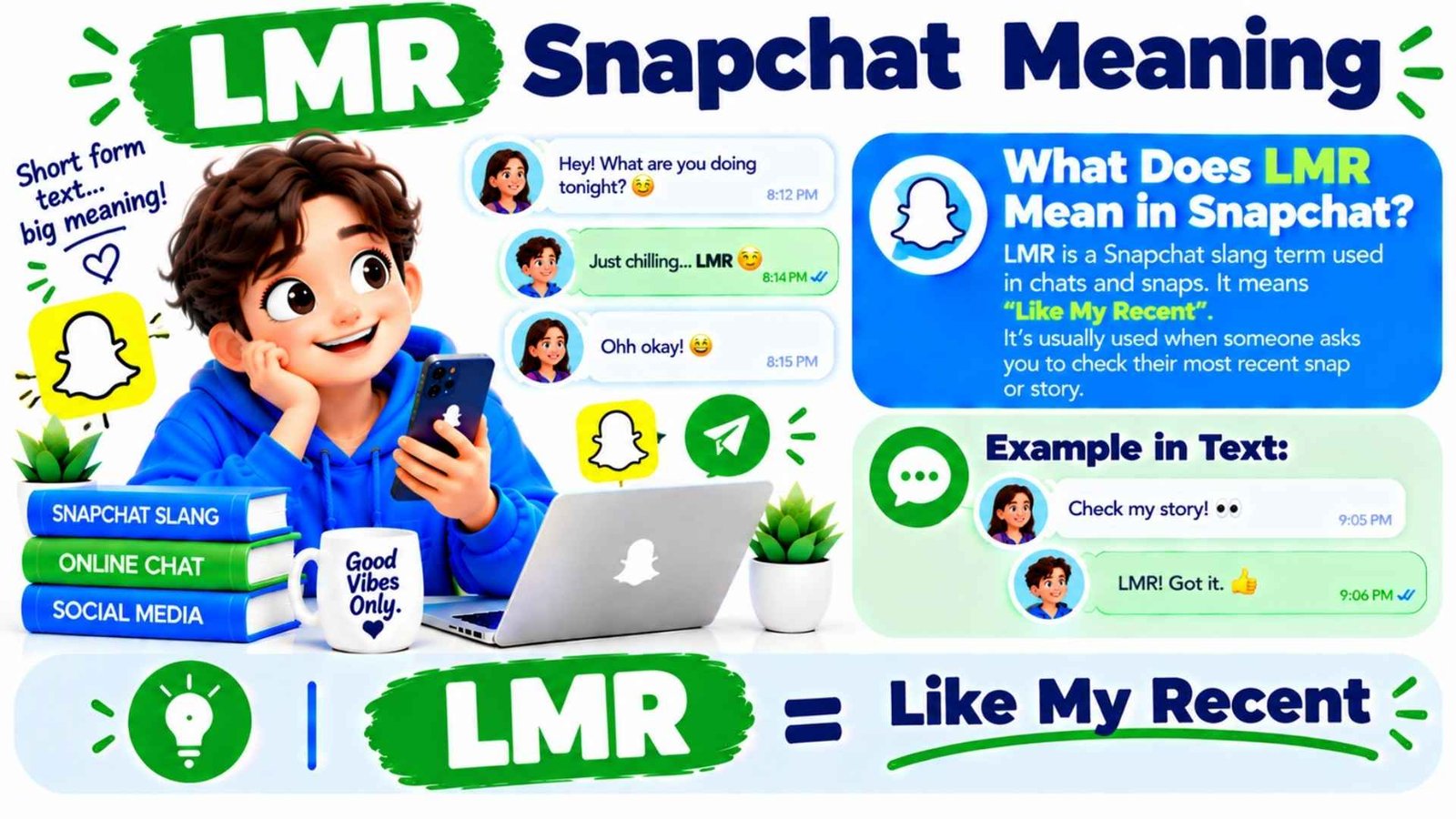
Seeing LMR Snapchat in a message can spark curiosity, especially when you’re unfamiliar with the abbreviation. In most social media conversations, LMR meaning Snapchat is “Like My Recent,” a simple request to interact with someone’s latest post or content.
1. “Like My Recent” (Most Popular Meaning)
Like My Recent is the most common interpretation of LMR on social media. People use it to encourage friends or followers to like their latest photo, video, or post, helping them receive more engagement.
- LMR stands for Like My Recent.
- Snapchat users may use it to request engagement.
- Recent content usually means a newly shared post.
- Social engagement helps people interact with one another.
- Casual messaging makes the abbreviation quick and convenient.
How Is Like My Recent Used?
People often use LMR when they want friends to support their latest content without writing a lengthy request. The phrase is informal and generally appears in direct messages, captions, or conversations among friends.
Example in texting:
Friend 1: Just posted a new pic on my story!
Friend 2: LMR 😊
2. “Last Minute Resistance” (Less Common)
In dating or behavioral discussions, LMR can mean Last Minute Resistance. This refers to hesitation expressed near the point of making a decision. However, this definition is context-specific and is not the usual meaning in everyday Snapchat conversations.
- Last Minute Resistance describes hesitation before a decision.
- Dating discussions may use this abbreviation.
- Relationship conversations can give LMR a different meaning.
- Context helps distinguish it from social media slang.
- Respecting boundaries is important when someone expresses hesitation.
When Does LMR Mean Last Minute Resistance?
This interpretation is more likely in discussions about dating, relationships, or decision-making than in casual Snapchat messages. It should not be assumed when someone simply asks you to interact with their latest post.
Example in texting:
Friend 1: What does LMR mean in that dating discussion?
Friend 2: It means Last Minute Resistance in that context.
3. “Let Me Respond” (Rare Usage)
In some conversations, LMR may be used informally to mean Let Me Respond. This is a less established interpretation, so the surrounding message matters. If someone uses it this way, they may be asking for a moment to provide a proper reply.
- Let Me Respond is a possible informal interpretation.
- Long conversations may require a thoughtful response.
- Messaging pauses give people time to explain.
- Context clues help clarify the intended meaning.
- Clear wording can prevent unnecessary confusion.
How Is Let Me Respond Used in Chats?
When someone needs time to reply, they may use an abbreviation or simply ask the other person to wait. Since this meaning is uncommon, writing the full phrase can make the intention clearer.
Example in texting:
Friend 1: Can you explain what happened earlier?
Friend 2: LMR, let me organize my thoughts first.
what does lmr mean in texting
The LMR Snapchat meaning is generally connected to social media engagement, but texting abbreviations can vary between groups. Understanding LMR meaning on Snapchat alongside the conversation helps you identify whether someone wants a post interaction or is using a less common definition.
How Can You Identify the Meaning in a Message?
The easiest way to understand LMR is to look at what the sender is discussing. A message about a new picture usually points toward social engagement, while a relationship discussion may suggest another interpretation.
- Check the topic before interpreting the abbreviation.
- Look for post references such as pictures or stories.
- Consider the sender and your usual conversations.
- Read surrounding messages for useful clues.
- Ask politely if the intended meaning remains unclear.
| Message context | Possible meaning | Likely intention |
|---|---|---|
| New Snapchat post | Like My Recent | Request a like |
| Dating discussion | Last Minute Resistance | Discuss hesitation |
| Ongoing conversation | Let Me Respond | Ask for time |
Example in chat:
Friend 1: LMR, I just uploaded something!
Friend 2: Sure, I’ll check it out.
LMR meaning in text
The LMR meaning in text depends on the people communicating and the subject of their conversation. On social platforms, it often refers to liking recent content, while other interpretations are less common and depend on specific communities or circumstances.
Why Does Context Matter for LMR?
Short abbreviations can have several interpretations, and LMR is no exception. Rather than relying on the letters alone, consider the message, platform, and purpose of the conversation to understand what the sender means.
- Social media requests often refer to recent posts.
- Personal discussions may use specialized meanings.
- Informal slang changes between online communities.
- Message history provides additional meaning.
- Direct clarification prevents misunderstandings.
Example in texting:
Friend 1: LMR, my new picture is up!
Friend 2: Oh, you mean Like My Recent?
LMR mean
The phrase LMR Snapchat can have different meanings depending on how someone uses it. Most Snapchat users who encounter it in casual conversations will find that it refers to liking someone’s recent content, although other interpretations are possible.
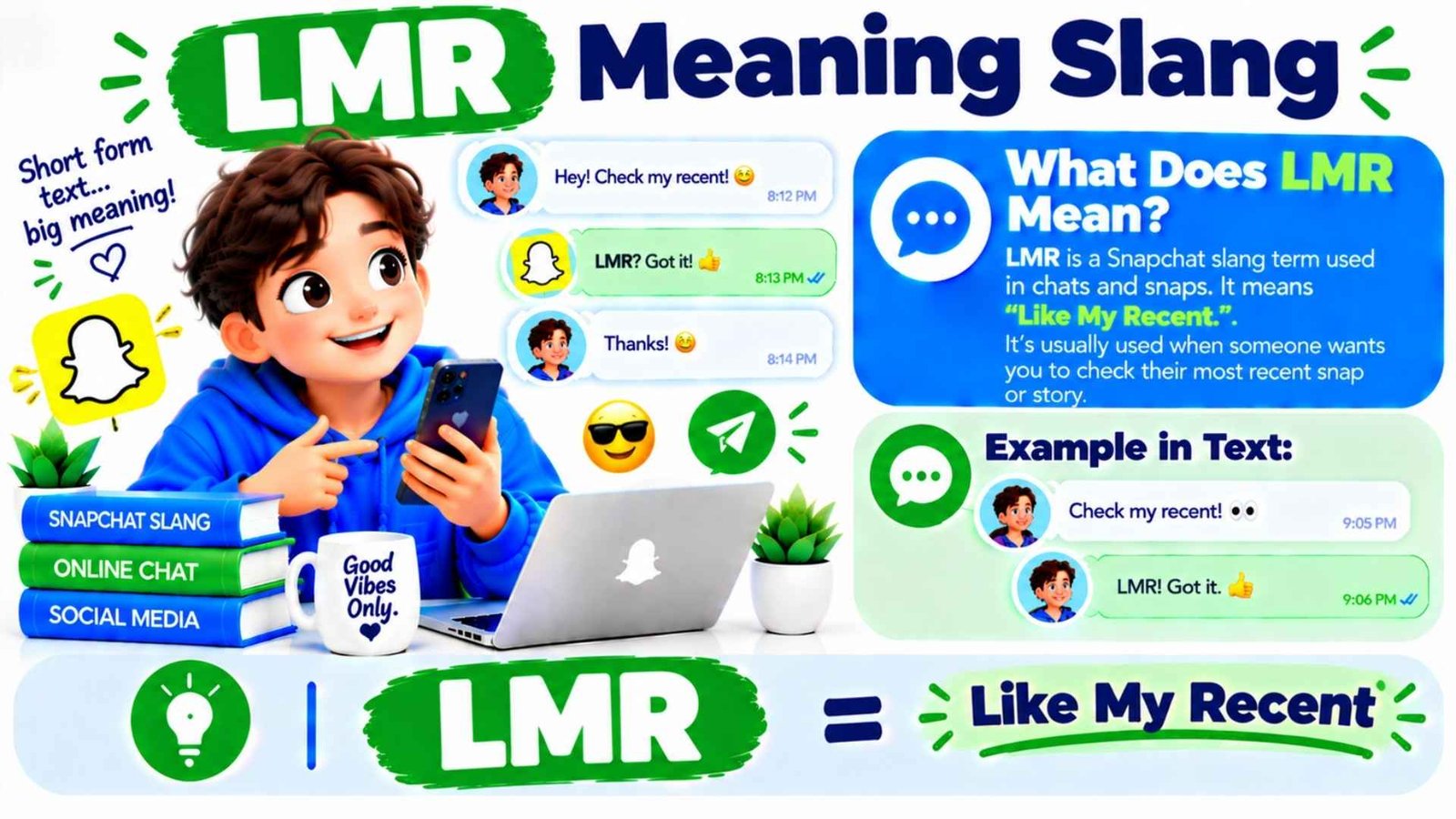
What Does LMR Usually Mean in Casual Conversations?
In everyday digital communication, abbreviations make conversations faster and more convenient. LMR is one such abbreviation, especially when people are discussing photos, posts, or social media activity.
- Like My Recent is the common social media interpretation.
- Quick messages make LMR easy to type.
- Snapchat conversations often use informal expressions.
- Friends and followers may request post engagement.
- Context determines whether another interpretation makes sense.
Example in texting:
Friend 1: LMR, I uploaded new pictures.
Friend 2: Okay, I’ll take a look!
LMR meaning on snapchat
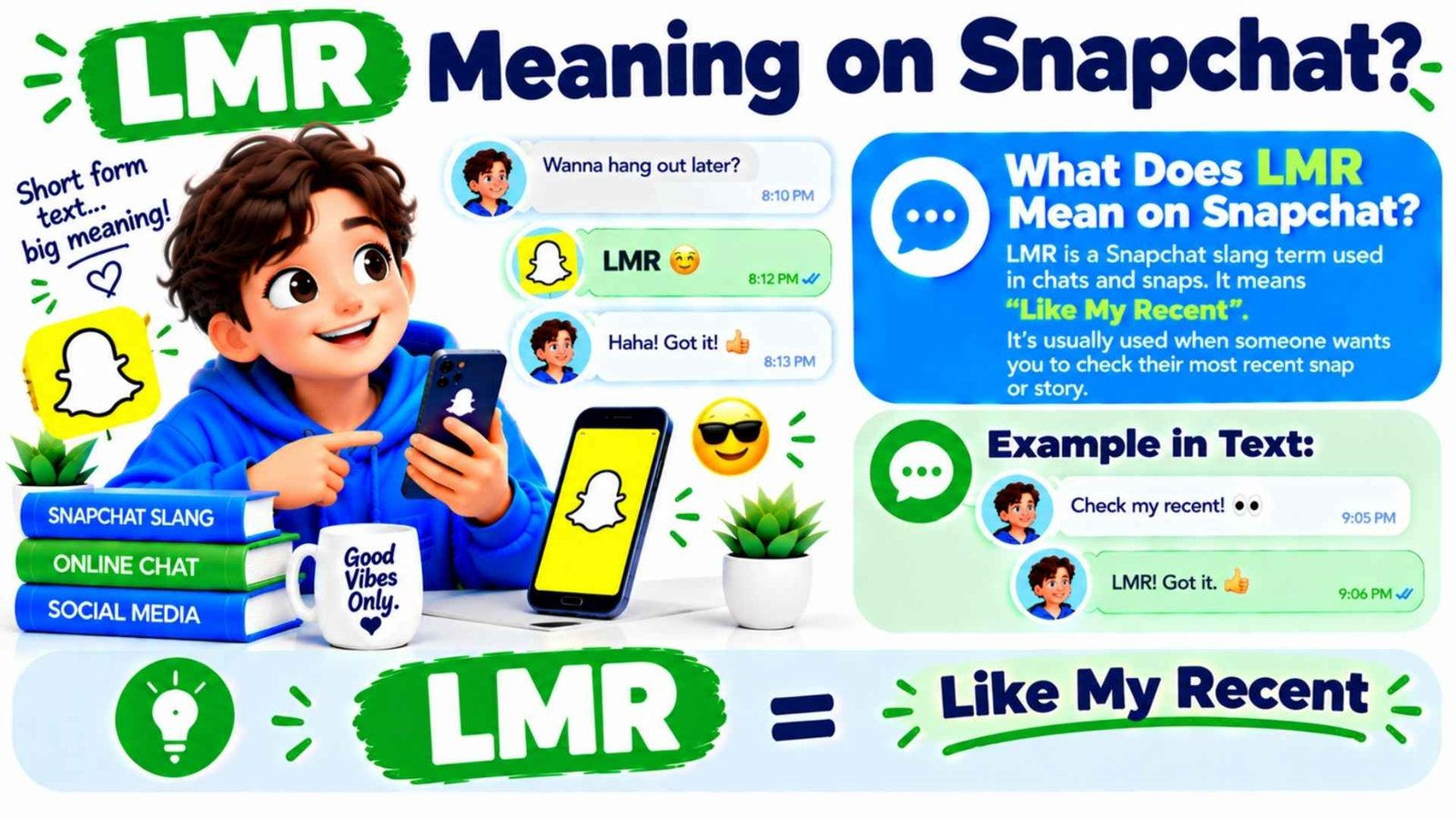
The LMR meaning on Snapchat is most commonly Like My Recent, an informal way of asking someone to engage with recently shared content. It may appear in chats or other social interactions, although its use can vary among friends and communities.
How Do Snapchat Users Use LMR?
Snapchat is designed around sharing photos, videos, stories, and messages. When users ask someone to like their recent content, they may use LMR as a short, convenient request rather than typing the complete phrase.
- Snapchat chats make it easy to share quick requests.
- Recent posts are the usual focus of LMR.
- Friends may exchange likes as a gesture of support.
- Stories provide opportunities for reactions and replies.
- Informal language keeps interactions relaxed and conversational.
| Snapchat activity | How LMR may be used |
|---|---|
| Sharing a new picture | Asking friends to like recent content |
| Sending a direct message | Requesting engagement |
| Talking about a post | Referring to recently shared content |
| Supporting a friend | Encouraging interaction with a post |
| Group conversations | Asking several friends for engagement |
Is LMR Different on Snapchat and Instagram?
The abbreviation generally has a similar social media meaning across platforms. However, the type of content and available interaction features can differ, so it is useful to consider where the message was sent.
- Snapchat focuses on stories, snaps, and direct communication.
- Instagram features posts, reels, and profile content.
- LMR can request engagement on either platform.
- Platform features influence how people interact.
- Personal preferences affect how users respond.
Example in chat:
Friend 1: LMR on my latest Snapchat post!
Friend 2: Sure, I’ll check it out. 😊
Why Is LMR So Popular?
Online conversations move quickly, and people often prefer short expressions that communicate their intentions without lengthy explanations. LMR Snapchat is one example of this informal language, making it convenient for users who want to request engagement from their friends.
Why Do People Use LMR Online?
Digital slang allows people to communicate in a casual and familiar way. LMR is particularly convenient when someone wants to ask for social media engagement without repeating the same request in every message.
- Saves time when sending short messages.
- Encourages interaction with recently shared content.
- Creates familiarity among friends who use slang.
- Fits digital habits on messaging platforms.
- Simplifies requests without lengthy explanations.
| Reason | How it helps |
|---|---|
| Convenience | Reduces typing |
| Engagement | Encourages post interaction |
| Familiarity | Creates a shared online vocabulary |
| Speed | Makes requests easier to send |
| Informality | Keeps conversations relaxed |
Example in texting:
Friend 1: LMR, guys! New post is live.
Friend 2: Done! The picture looks great.
How LMR Is Used on Social Media
Across social platforms, LMR is often used as a short request for likes or engagement. Its meaning is generally easy to understand when it appears alongside references to pictures, recent posts, or newly uploaded content.
Common Use Cases:
People use LMR in different situations, particularly when sharing content with friends and followers. The exact request may vary, but the main idea is usually to encourage others to interact with something recently posted.
- New pictures: Asking friends to like a recent photo.
- Snapchat stories: Encouraging friends to view or react.
- Social engagement: Requesting interaction from followers.
- Mutual support: Exchanging likes with friends.
- Online communities: Encouraging members to support one another.
Examples:
These examples show how LMR may appear in everyday social media conversations. The abbreviation usually works best when the person receiving the message understands which post or content the sender is referring to.
- Snapchat: “LMR on my new snap!”
- Instagram: “Posted a new picture, LMR.”
- Direct message: “Hey, LMR when you get a chance.”
- Group chat: “Everyone, LMR on my latest post.”
- Friendly request: “LMR and I’ll check out yours too.”
How Can You Use LMR Naturally on Social Media?
A short request can be effective when it is friendly and specific. Instead of repeatedly sending LMR, users can mention the content they want friends to see and leave others free to decide whether to engage.
| Situation | Natural message |
|---|---|
| New picture | “LMR on my latest photo!” |
| New story | “Check out my new story.” |
| Friends’ group | “Show some love to my recent post.” |
| Mutual support | “I’ll support your post too.” |
| Private conversation | “LMR if you have a minute.” |
Example in chat:
Friend 1: Just shared some vacation photos. LMR!
Friend 2: I’ll have a look when I’m free.
LMR in Text Messages (Real-Life Examples)
Understanding LMR meaning on Snapchat becomes easier when you see how people use it in actual conversations. Whether someone is sharing a picture or chatting with friends, the meaning usually becomes clear from the surrounding words.
Casual Chat
In casual conversations, friends may use LMR when talking about new pictures, posts, or stories. It keeps the message short while communicating a request that both people may already understand.
- Friendship: Used in relaxed conversations.
- Pictures: May refer to recently uploaded photos.
- Quick replies: Makes short interactions convenient.
- Friendly requests: Can encourage engagement without formality.
- Context: Helps the recipient understand the request.
Example in texting:
Friend 1: Hey, I uploaded a new selfie!
Friend 2: LMR? Sure, send me the link.
Social Media Promotion
Some users share LMR when trying to increase interaction with their latest content. It can be used among friends or within social groups, although engagement is never guaranteed simply because someone asks for it.
- New content: Directs attention to a recent upload.
- Audience: Encourages friends to interact.
- Visibility: May support early engagement.
- Sharing: Helps others find recently posted content.
- Courtesy: Keeps requests polite and optional.
Example in chat:
Friend 1: LMR on my latest post, please!
Friend 2: I’ll check it out after class.
Group Chat
Group chats make it possible to send one message to several people at once. Someone may use LMR to ask the group to support a new post, although each person can choose whether to respond.
- Group messages: Reach several friends simultaneously.
- Shared interests: Encourage mutual interaction.
- Quick communication: Avoids sending separate requests.
- Friendly support: Helps maintain social connections.
- Respect: Allows everyone to choose whether to participate.
Example in texting:
Friend 1: Guys, LMR on my recent snap!
Friend 2: I’ll check it out later!
Different Meanings of LMR Based on Context
The abbreviation LMR does not have one universal definition across every online community. Although Like My Recent is a common social media interpretation, other meanings can appear in specialized discussions or informal personal conversations.
How Can You Tell Which Meaning Is Correct?
Understanding the subject of a conversation is usually the simplest way to interpret an abbreviation. The same three letters can communicate different things depending on the platform, relationship, and topic being discussed.
- Social media: Usually refers to Like My Recent.
- Dating discussions: May refer to Last Minute Resistance.
- Personal messages: Could informally mean Let Me Respond.
- Conversation history: Offers clues about intended meaning.
- Clarification: Helps resolve uncertainty.
| Context | Possible meaning | Example |
|---|---|---|
| Snapchat | Like My Recent | “LMR on my snap.” |
| Like My Recent | “LMR on my latest photo.” | |
| Dating discussions | Last Minute Resistance | “They discussed LMR in dating.” |
| Informal messaging | Let Me Respond | “LMR, I’ll explain.” |
| Unfamiliar conversation | Unclear | Ask what the sender means |
Example in texting:
Friend 1: I saw LMR in a discussion. What does it mean?
Friend 2: It depends on the topic. Where did you see it?
Common Misunderstandings About LMR
Because LMR Snapchat can have more than one interpretation, people sometimes misunderstand it in messages. Knowing how the abbreviation works can help you avoid confusion and respond appropriately in different social situations.
Thinking It Has Only One Meaning
It is easy to assume that LMR always refers to social media engagement. However, abbreviations may have different meanings in specific communities, so interpreting them without context can lead to misunderstandings.
- Avoid assumptions when the topic is unclear.
- Check context before responding to the message.
- Recognize alternatives in specialized discussions.
- Consider the platform where the abbreviation appears.
- Ask questions when the meaning is uncertain.
Example in texting:
Friend 1: What does LMR mean here?
Friend 2: In this chat, it means Like My Recent.
Using It in Formal Conversations
LMR is informal slang, so it may not be suitable for professional emails, business messages, or official communication. Using complete phrases can make your meaning clearer when speaking with colleagues, clients, or people unfamiliar with online abbreviations.
- Professional emails: Use complete and clear sentences.
- Business chats: Avoid unfamiliar abbreviations.
- Formal requests: Explain your intention directly.
- Workplace communication: Prioritize clarity and courtesy.
- Personal conversations: Use slang when appropriate.
Example in texting:
Colleague 1: Could you review my latest report?
Colleague 2: Sure, I’ll review it and get back to you.
Confusing It with Similar Acronyms
Some abbreviations look similar but communicate entirely different ideas. Recognizing common texting acronyms can help you understand messages without confusing one term with another.
- LMK: Means Let Me Know.
- LMAO: Means Laughing My Ass Off.
- LTR: Often means Long-Term Relationship.
- BRB: Means Be Right Back.
- LMR: Commonly means Like My Recent on social media.
| Acronym | Full form | Common use |
|---|---|---|
| LMR | Like My Recent | Social media engagement |
| LMK | Let Me Know | Asking for information |
| LMAO | Laughing My Ass Off | Expressing amusement |
| LTR | Long-Term Relationship | Dating discussions |
| BRB | Be Right Back | Temporary absence |
Example in chat:
Friend 1: Is LMR the same as LMK?
Friend 2: No, LMR usually means Like My Recent, while LMK means Let Me Know.
When Should You Use LMR?
Using LMR Snapchat slang can make casual conversations quicker, particularly when talking to friends who already understand the abbreviation. However, the right moment depends on your audience, the platform, and whether a request for engagement feels appropriate.
When Is It Appropriate to Use LMR?
LMR is generally suited to relaxed online conversations where informal expressions are familiar. It can be useful for requesting attention for a recent post, but it should not create pressure or an expectation that others must engage.
- Casual chats: Use it with friends who know the term.
- Social media: Request engagement with recent content.
- Friend groups: Share it when the context is clear.
- Online communities: Follow the group’s communication style.
- Personal messages: Keep requests polite and optional.
| Situation | Is LMR suitable? | Alternative |
|---|---|---|
| Chatting with friends | Yes, if understood | LMR |
| Sharing a new picture | Yes | Check out my latest post |
| Professional email | Usually not | Please review my update |
| Talking to strangers | Depends on context | Like my latest post |
| Formal business communication | Usually not | Please view my recent update |
Example in texting:
Friend 1: LMR on my latest snap if you like it!
Friend 2: Sure, I’ll take a look.
Alternatives to LMR (Similar Slang Terms)
Not everyone is familiar with LMR, and some people prefer messages that explain the request more clearly. Depending on the conversation, you can use simple phrases or other common abbreviations to communicate the same general idea.
For Social Media Engagement
When asking friends to interact with a recent photo, video, or post, a direct phrase may be easier to understand than an abbreviation. A friendly request can communicate the intention without relying on slang.
- Like my post: Clearly asks for a like.
- Check out my latest pic: Directs attention to a photo.
- Show some love: Encourages friendly engagement.
- React to my story: Requests a story reaction.
- Visit my profile: Invites someone to view your content.
Example in chat:
Friend 1: Can you check out my latest picture?
Friend 2: Of course, I’ll have a look!
For Conversation
If someone uses LMR to mean they need time to reply, simple expressions can communicate that intention more clearly. These alternatives are useful when the recipient may not understand the abbreviation.
- Let me explain: Introduces a fuller response.
- Give me a moment: Requests a short pause.
- Hold on: Signals a brief wait.
- Let me respond: Explains the need to reply.
- I’ll get back to you: Indicates a later response.
Example in texting:
Friend 1: Can you explain what you meant?
Friend 2: Give me a moment, and I’ll explain.
For Casual Chat
Everyday conversations often use short abbreviations that people already recognize. Choosing a familiar expression can make messages easier to understand and reduce the chance of confusion.
- LMK: Ask someone to let you know.
- BRB: Tell someone you’ll be right back.
- BTW: Introduce something by the way.
- TTYL: Say talk to you later.
- OMG: Express surprise or excitement.
| Term | Meaning | Typical purpose |
|---|---|---|
| LMK | Let Me Know | Request information |
| BRB | Be Right Back | Indicate a short absence |
| BTW | By The Way | Add information |
| TTYL | Talk To You Later | End a conversation |
| OMG | Oh My God | Express surprise |
Example in chat:
Friend 1: BRB, I’ll message you soon.
Friend 2: Okay, TTYL!
Why Understanding Text Slang Matters
Online slang is a regular part of digital communication, particularly in informal conversations. Learning expressions like LMR meaning on Snapchat can help you understand messages, avoid unnecessary confusion, and communicate comfortably with friends and online communities.
How Does Knowing Slang Improve Communication?
Understanding common abbreviations makes it easier to follow fast-moving conversations. It can also help you recognize when an expression is informal, context-specific, or better replaced with clearer wording.
- Improves understanding of short online messages.
- Reduces confusion when reading unfamiliar abbreviations.
- Builds connections with people who share similar slang.
- Supports communication across different digital platforms.
- Encourages clarity by helping you recognize ambiguous expressions.
What Are the Benefits of Learning New Abbreviations?
Knowing the meaning of frequently used terms can make digital communication feel more natural. It also allows you to recognize different conversational styles without needing to use every abbreviation yourself.
- Recognize trends in online language.
- Understand context in social media conversations.
- Respond appropriately to informal messages.
- Avoid awkward replies caused by misunderstanding.
- Choose clearer language when communicating with unfamiliar people.
Example in texting:
Friend 1: Someone just messaged me LMR. What does that mean?
Friend 2: Usually Like My Recent, especially on social media.
Pros and Cons of Using LMR
Like other forms of texting slang, LMR has practical benefits but may not work for every conversation. Understanding its advantages and limitations can help you decide when an abbreviation is clear, useful, or better replaced with a complete phrase.
Pros
LMR can make casual communication quicker when both people understand its meaning. It may also provide a simple way to request interaction without writing a longer message.
- Saves time: Requires fewer words to type.
- Easy to remember: Uses a short abbreviation.
- Encourages interaction: Can invite engagement with recent content.
- Feels casual: Fits relaxed conversations.
- Convenient: Works in quick online messages.
Cons
Despite its convenience, LMR may confuse people who have never encountered it. It can also feel repetitive or demanding when used too frequently to request social media engagement.
- Causes confusion: Multiple meanings can be misunderstood.
- Lacks clarity: Unfamiliar recipients may not understand it.
- Feels repetitive: Frequent requests can become annoying.
- Is informal: Not suitable for many professional settings.
- May create pressure: Some recipients may feel expected to engage.
| Pros | Cons |
|---|---|
| Quick to type | May be unclear |
| Easy for familiar users | Not universally recognized |
| Suitable for casual chats | Unsuitable for formal messages |
| Encourages engagement | Can feel repetitive |
| Convenient for friends | May be misunderstood |
Example in chat:
Friend 1: LMR on every picture I upload!
Friend 2: I might miss some, but I’ll check when I can.
Tips for Using LMR Correctly
Using LMR naturally is mostly about understanding your audience and making sure your message is clear. A thoughtful approach helps keep social media interactions friendly without making anyone feel obligated to engage with your content.
What Should You Remember Before Sending LMR?
A little consideration can make online conversations more comfortable. Before sending LMR, think about whether the other person understands the abbreviation and whether your request suits the conversation.
- Know your audience: Use slang with people who understand it.
- Check the context: Make sure your request is clear.
- Stay polite: Avoid demanding likes or reactions.
- Use it sparingly: Prevent repetitive messages.
- Respect choices: Let others decide whether to engage.
Example in texting:
Friend 1: LMR on my recent post if you get a chance!
Friend 2: Sure, I’ll check it out later.
What Does LMR Mean on Snapchat From a Girl or Guy?
When a girl or guy sends LMR on Snapchat, the abbreviation usually means Like My Recent. The meaning itself does not change based on the sender’s gender, although the reason for sending it may depend on the relationship and conversation.
Does LMR Mean Someone Likes You?
Receiving LMR does not automatically indicate romantic interest. It is generally a request for social media engagement, so it is important to consider the wider conversation rather than assuming the sender has romantic intentions.
- Social engagement: They may simply want a like.
- Friendship: They may be seeking support from friends.
- Flirting: It could be part of a wider playful conversation.
- Content sharing: They may want you to see a recent post.
- Context: Other messages provide more information about their intention.
Example in chat:
Person 1: LMR on my new snap 😊
Person 2: Sure! Your picture looks nice.
How Should You Reply When Someone Says LMR?
If someone sends you LMR, your response depends on whether you understand the request and want to engage with their content. You can respond casually, ask what they mean, or choose not to interact.
What Are Some Natural Replies to LMR?
A simple response is usually enough when someone asks you to like their recent content. You do not need to overthink the reply, especially when you are chatting with friends.
- “Done!” when you have liked their content.
- “I’ll check it out” when you have not seen it yet.
- “Which post?” when you are unsure what they mean.
- “Sure!” when you are happy to engage.
- No reply when you prefer not to participate.
| Reply | When to use it |
|---|---|
| Done! 😊 | After liking the post |
| I’ll check it out | When you have not viewed it |
| Which one? | When the post is unclear |
| Sure, no problem | When you are willing to engage |
| Thanks for sharing | When acknowledging their message |
Example in texting:
Friend 1: LMR, please! ❤️
Friend 2: Done! Nice picture.
Frequently Asked Questions (FAQs)
1. What does LMR mean on Snapchat?
LMR on Snapchat usually means Like My Recent. It is a casual request to like someone’s latest content.
2. What does LMR mean in texting from a girl?
LMR generally means Like My Recent when used in social media messages. It does not necessarily indicate romantic interest.
3. What does LMR mean on Snapchat from a guy?
LMR usually means Like My Recent when a guy sends it. He may simply be asking you to engage with his latest post.
4. Is LMR the same as LMK?
No, LMR usually means Like My Recent, while LMK means Let Me Know. They serve different purposes in texting.
5. Is LMR rude or inappropriate?
LMR is generally informal and not inherently rude. However, repeated requests for likes may annoy some people.
6. How do you respond to LMR on Snapchat?
You can respond to LMR by liking the recent post or replying politely. You can also ask what the sender means.
7. Can LMR have different meanings?
Yes, LMR can have different meanings depending on the context. Like My Recent is common online, while other interpretations are less frequent.
Conclusion
Understanding LMR Meaning Snapchat slang makes it easier to follow everyday conversations and social media interactions. In most casual online situations, LMR meaning on Snapchat refers to Like My Recent, a simple request to engage with someone’s latest content. However, the abbreviation can have other meanings in specific contexts, so checking the conversation is always helpful.
Whether you see LMR in a direct message, a group chat, or a social media post, the surrounding words can help you understand the sender’s intention. You can respond by liking the content, replying with a friendly message, or asking for clarification if needed.
Ultimately, LMR Meaning Snapchat is simply one of many abbreviations used in digital communication. Understanding LMR helps you communicate more clearly while respecting other people’s preferences. The next time you receive it, consider the context and respond in a way that feels natural to you.

LearnerGrammar.com helps English learners improve grammar, vocabulary, writing, and communication skills with simple lessons and tips.